
Success can be a dangerous thing.
Not because it’s fleeting. Not because it’s hard to achieve. But because when it shows up, loud and consistent, it creates its own echo chamber. I’ve been there. A leadership role with high-performing teams, targets crushed quarter after quarter, meetings that finished early because everyone was aligned. It felt like excellence on autopilot.
Until it wasn’t.
What we failed to realize at the time was that we had stopped challenging each other. Our alignment became our insulation. We were too synced, too smooth, too satisfied. We didn’t see the blind spots forming—not until they hit us head-on.
The High-Performance Trap
It happens to the best teams. The stronger the bond, the harder it is to detect when that strength becomes rigidity. When performance is strong, no one wants to “rock the boat.” Risk-taking gives way to maintenance. Diverse perspectives start to disappear in favor of efficient agreement. And suddenly, without realizing it, you’re managing momentum rather than creating impact.
We mistook agreement for alignment. And in doing so, we started recycling decisions instead of refining them.
I remember one planning session clearly. I asked a tough question, something that should have sparked a real debate. But what I got instead was a polite nod and a shift back to the slide deck. We had built a team that trusted each other deeply… but we forgot to build a culture that invited dissent.
That was the moment I realized something had gone off track.
The Turning Point
We eventually broke the pattern but not easily. It started with bringing in two external voices. They weren’t consultants in the traditional sense. They were seasoned leaders who didn’t owe us anything. People with sharp minds, clear values, and no attachment to our success story.
They poked holes. They challenged our assumptions. They made us uncomfortable in the best possible way.
And that discomfort became our gift. Because the moment we were forced to confront what we weren’t seeing, we started leading again.
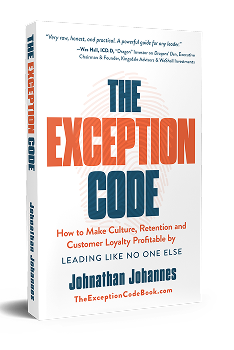
That experience led to one of the core principles I teach in #TheExceptionCode
“Dissent is a gift. Comfort is the trap.”
High-performing teams don’t just measure outcomes, they interrogate their own thinking. They don’t just celebrate alignment—they seek challenge. And most importantly, they don’t avoid discomfort, they invite it.
Comfort Feels Good. But It’s Not Growth.
Comfort is seductive. It whispers that everything is fine. That the metrics look good. That the people are happy. But comfort, unchecked, becomes complacency. And complacency is the quiet killer of progress.
In one of my regional roles, I led a team across multiple territories in the Caribbean. From the outside, we looked like a powerhouse: top-line growth, improved operational KPIs, and rising employee satisfaction. But underneath that surface, something was missing, curiosity.
We were rehearsing success, not reimagining it.
It wasn’t until we started asking each territory to present what they disagreed with, yes, disagreed, that we started surfacing the ideas that had been buried under team politeness. Some of our biggest innovations came not from agreement, but from challenge.
We shifted the culture from “consensus-driven” to “curiosity-driven.” And it changed everything.
How to Build a Culture That Welcomes Dissent
If you’re leading a high-performing team today, ask yourself:
- When was the last time someone challenged your idea?
- Do people feel safe disagreeing with you, or just safe agreeing?
- Is your success built on momentum… or on renewed perspective?
Here’s how to start shifting:
- Create the container for dissent
Set clear expectations that challenge is welcomed, not punished. Say it. Show it. Celebrate it.
- Appoint a devil’s advocate
Rotate the role in meetings. Their job? To ask, “What if we’re wrong?” It depersonalizes disagreement and normalizes interrogation.
- Bring in outside eyes
Whether it’s peers from another region or leaders from another industry, fresh eyes expose hidden patterns.
- Measure the quality of decisions, not just results
A good outcome doesn’t mean the process was solid. Audit how you made the decision, not just what the decision produced.
- Model it at the top
If you’re not visibly open to feedback, no one else will be either. Share your own missteps. Let people see your learning in real time.
Final Thought: Disrupt Yourself Before the Market Does
Leadership isn’t just about performance, it’s about perspective. And perspective can only grow through friction.
Great leaders know that dissent isn’t disloyalty, it’s devotion to something better. And comfort? Comfort is just the padded cell that success builds around itself if you’re not careful.
So here’s my challenge to every leader reading this…
Who’s telling you the truth you don’t want to hear?
If you can’t answer that question confidently, it’s time to widen your circle, reframe your culture, and revisit how you define collaboration.
Because in this new era of leadership, alignment without challenge is a liability.
Let’s keep leading boldly, bravely and with just the right dose of discomfort.